
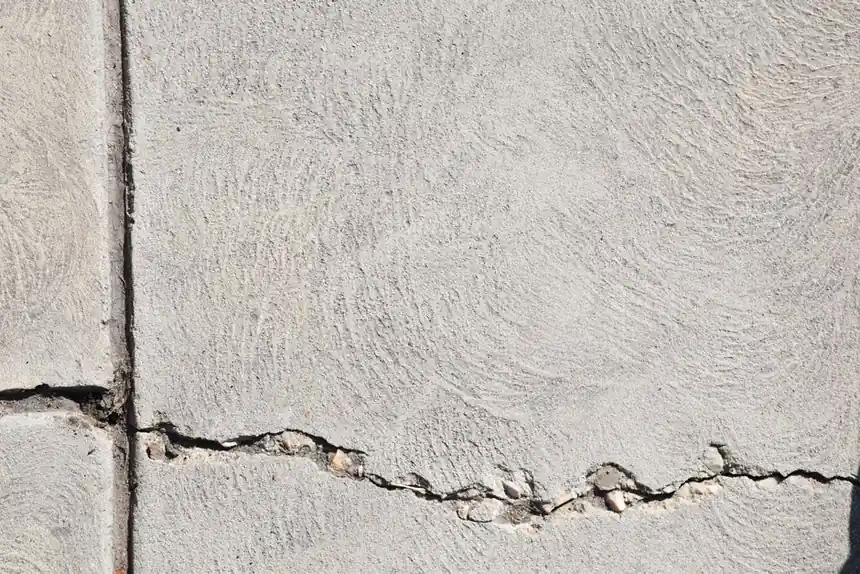
You level a sunken concrete sidewalk by lifting the slab back to grade from underneath, not by pouring new concrete on top. In Lakeland, that almost always means mudjacking or polyurethane foam jacking, because our sandy soil and high water table shift slabs constantly. The slab itself is usually fine. The ground under it is not.
We have leveled hundreds of sidewalks across Polk County, and the pattern is always the same: a slab drops an inch or two at a joint, water pools in the dip, and the gap grows every rainy season. This post covers why that happens here, how each leveling method works, what 2026 pricing looks like in Lakeland, and when a repair is genuinely a DIY job versus a call to us.
Why Concrete Sidewalks Sink in Lakeland
Concrete sidewalks in Lakeland sink because the soil beneath them compresses, erodes, or gets washed out - the slab is just following the ground down. Central Florida sits on sandy, well-drained soil that reacts fast to water. When a downspout dumps onto a walkway or irrigation heads spray the same spot every morning, that sand migrates.
Three things drive most of the sinkage we see:
- Soil consolidation. Loose fill dirt under a slab settles over 5 to 15 years, especially where a builder backfilled a utility trench.
- Water erosion. Lakeland gets roughly 50 inches of rain a year, most of it between June and September. Water finds the joint, washes out the base, and leaves a void.
- Tree roots. Live oaks and magnolias pull moisture from under slabs, and the soil shrinks as it dries.
You can usually spot the cause before anyone touches the concrete. If one corner dropped and the rest of the run is flat, it is a void. If the whole slab settled evenly, it is consolidation. If it heaved upward in one spot, roots or clay are pushing from below - and that is a different repair entirely.
Homeowners near the older blocks around Concrete Contractor in Downtown Lakeland deal with this more than most, because those sidewalks were poured decades ago over fill that has long since settled. Newer subdivisions out toward the Concrete Contractor in The Lakeland Highlands see it too, just on a shorter timeline - usually 8 to 12 years after the original pour.
How Do I Level a Sunken Concrete Sidewalk in Lakeland FL?
You level a sunken concrete sidewalk in Lakeland FL by injecting a material under the slab that fills the void and pushes the concrete back up to grade. There are two mainstream methods, and both work from small holes drilled through the concrete itself.
Mudjacking (slabjacking)
Mudjacking pumps a cement-and-soil slurry through 1-inch holes drilled in the low slab. The pressure lifts the concrete, and the slurry hardens into a stable base. A typical residential sidewalk section takes 30 to 60 minutes to lift. The holes get patched with matching concrete, and you can walk on it the same day.
Polyurethane foam jacking
Foam jacking injects expanding polyurethane resin instead of slurry. The foam is lighter - roughly 2 pounds per cubic foot versus 100-plus for slurry - so it does not overload soft soil. It also cures in about 15 minutes and does not wash out. That matters in a place where the water table sits high and rain comes in buckets.
For a single sidewalk panel, foam jacking is usually the better long-term fix in Lakeland. For a long, uniformly settled run where cost matters more than weight, mudjacking wins on price.
Mudjacking vs. Foam Jacking vs. Replacement
Replacement is the right answer when the concrete itself is broken, crumbled, or cracked through - leveling a shattered slab just gives you a shattered slab at the right height. If the slab is intact and only dropped, lifting it costs a fraction of a tear-out.
Here is how the three options compare on a standard 5-foot by 5-foot sidewalk panel in Lakeland:
- Mudjacking: $150 to $350 per panel, 1 to 3 year warranty typical, lifespan 8 to 15 years.
- Foam jacking: $300 to $600 per panel, 5 to 10 year warranty typical, lifespan 15 to 25 years.
- Remove and replace: $600 to $1,200 per panel, plus 3 to 7 days of cure time before you can walk on it.
Replacement also means demolition dust, a dumpster, and a fresh pour that has to cure. On a full sidewalk run, that adds up fast. We only recommend tear-out when the concrete is already failing structurally or when the slab is more than 4 inches below grade and lifting would create a trip hazard at the joint.
If your walkway is intact but stained, cracked at the surface, or just tired-looking, Concrete Resurfacing Lakeland FL is often a smarter spend than a full replacement. It restores the surface without touching the base.
How Much Does Concrete Sidewalk Leveling Cost in Lakeland FL?
Concrete sidewalk leveling in Lakeland runs $150 to $600 per panel in 2026, depending on the method and how much lift is needed. Most single-panel residential jobs land between $250 and $450. A full 40-foot sidewalk with four or five settled panels typically comes in at $900 to $2,200.
What moves the number:
- Access. If the slab is behind a fence or tight against a foundation, the pump hose has to reach further and setup takes longer.
- Lift height. Anything over 3 inches of lift needs more material and slower, staged pumping.
- Number of injection points. A long panel needs more holes than a short one.
- Void size. Big washouts under the slab eat material fast.
We quote per job, not per hour, and you get the number before we start. No surprise line items. If you have ever searched for concrete sidewalk leveling near me Lakeland FL and gotten three wildly different quotes, that spread is usually about method - one contractor is pricing mudjacking, another is pricing foam, and a third is pricing replacement.
Can I Level My Concrete Sidewalk Myself in Lakeland?
You can level a small, single sunken slab yourself if it is less than 1 inch low and the concrete is completely intact. The realistic DIY options are limited, and most of them are temporary.
What actually works for a homeowner:
- Mudjacking with a rented pump. Some equipment rental yards carry slabjacking rigs. Expect $300 to $500 for the rental plus material, which is often more than hiring it out for one panel.
- Self-leveling compound. Only works indoors. Outdoors in Florida, it cracks within a season.
- Grinding the high edge. If the slab next to the sunken one is high, grinding the lip can remove the trip hazard without lifting anything. This is a real fix for small offsets.
What does not work: pouring a new layer of concrete on top of the sunken slab. It looks fine for a few months, then delaminates and flakes off. We get called to remove those caps constantly.
If the drop is more than an inch, spans more than one panel, or sits anywhere near a public right-of-way, call a pro. Lakeland code enforcement can flag sidewalk trip hazards, and a botched DIY lift can make the liability worse, not better.
Common Mistakes We See on Lakeland Sidewalk Jobs
The most expensive mistake is treating a drainage problem as a concrete problem. If you lift a slab and never redirect the water that washed out the base, it will sink again within a few years.
Other repeat offenders:
- Lifting a cracked slab. If the concrete is broken through, lifting it just raises the crack. Replace it.
- Skipping the void fill. Some cheap jobs pump just enough material to raise the slab and leave the void underneath. It drops again the next wet season.
- Ignoring the joint. If the joint between two panels has opened up, water is already getting in. Seal it after leveling.
- Over-lifting. Pushing a slab past grade creates a new trip hazard in the opposite direction.
One more: assuming a sunken sidewalk is a foundation problem. It almost never is. Sidewalks sit on their own base, independent of the house. If your foundation is also moving, that is a separate conversation - and usually a different contractor.
When to Call a Professional
Call a professional when the slab has dropped more than 1 inch, when two or more panels are affected, or when the concrete is cracked, spalled, or crumbling. Those are the jobs where DIY goes wrong and costs you double.
We handle this every week. Our team drills, lifts, patches, and seals in a single visit, and we redirect the water source before we pack up. If the slab is too far gone to lift, we will tell you straight and quote a replacement instead of selling you a lift that will not hold.
If you are also dealing with a cracked driveway or a settled patio, we can look at all of it in one trip. Our Concrete Sidewalk Repair Lakeland FL service covers leveling, crack repair, and joint sealing together, which is how it should be done. And if the walkway needs to come out entirely, we handle Concrete Sidewalk Installation Lakeland FL with proper base prep so the new slab does not repeat the old one's mistakes.
Frequently Asked Questions
How do I level a sunken concrete sidewalk in Lakeland FL?
You level it by injecting mudjacking slurry or polyurethane foam through small holes drilled in the slab, which fills the void and lifts the concrete back to grade. In Lakeland, foam jacking is the more durable choice because it resists our high water table. Most single panels take under an hour.
What is the best method to level concrete sidewalk in Lakeland?
Polyurethane foam jacking is the best method for most Lakeland sidewalks. It is lightweight, cures in about 15 minutes, does not wash out, and lasts 15 to 25 years. Mudjacking costs less and works well on long, evenly settled runs where the soil is stable.
How much does concrete sidewalk leveling cost in Lakeland FL?
Expect $150 to $600 per panel in 2026, with most residential jobs landing between $250 and $450. A full sidewalk with four or five settled panels typically runs $900 to $2,200. Replacement costs roughly double that and adds cure time.
Can I level my concrete sidewalk myself in Lakeland?
Only if the slab is intact and less than 1 inch low. Renting a slabjacking pump often costs more than hiring it out for one panel, and self-leveling compound fails outdoors in Florida. Anything over an inch, or more than one panel, needs a pro.
How long does concrete sidewalk leveling last?
Foam jacking lasts 15 to 25 years in Lakeland conditions. Mudjacking lasts 8 to 15 years. Both timelines assume the water source that caused the sinkage - a downspout, irrigation head, or poor grading - gets redirected after the lift.
Get Help with Concrete Contractor in Lakeland
If your sidewalk has dropped and you want it fixed right the first time, we will come out, tell you whether it needs lifting or replacing, and give you a straight price. Lakeland Concrete Services is a local Concrete Contractor Lakeland FL serving homeowners across Polk County.
Call +1 863-398-0750 and we will get your sidewalk back to grade.